Multicast Anycast RP
Keep one RP service address while two spine routers share source information through PIM Anycast-RP.
Two RPs, one service address
Two leaves connect to both spines. Each spine has a unique Loopback0 for control communication and the same Loopback1 address 10.255.255.254/32 for the RP service. Both leaves use VNI 10010/group 239.1.1.1 and local VLAN 10. This is PIM Anycast-RP, not an anycast tenant gateway and not an anycast VTEP pair.
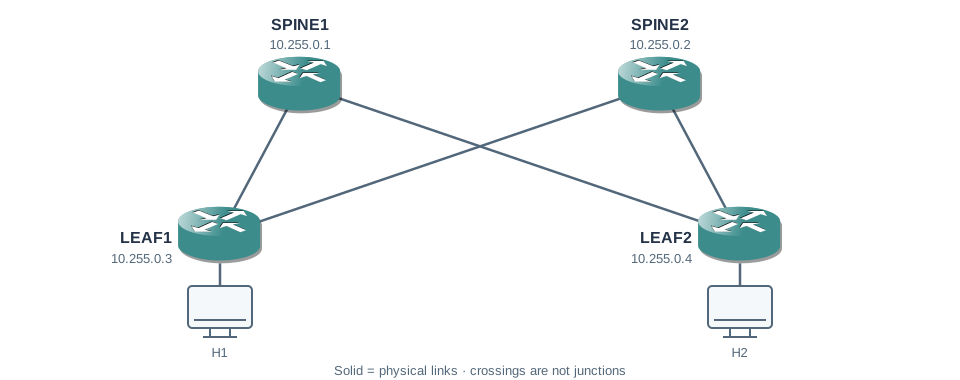
| Physical link | Address at first endpoint | Address at second endpoint |
|---|---|---|
| SPINE1 Ethernet1/1 ↔ LEAF1 Ethernet1/1 | 192.0.2.0/31 | 192.0.2.1/31 |
| SPINE1 Ethernet1/2 ↔ LEAF2 Ethernet1/1 | 192.0.2.2/31 | 192.0.2.3/31 |
| SPINE2 Ethernet1/1 ↔ LEAF1 Ethernet1/2 | 192.0.2.4/31 | 192.0.2.5/31 |
| SPINE2 Ethernet1/2 ↔ LEAF2 Ethernet1/2 | 192.0.2.6/31 | 192.0.2.7/31 |
| Device | Loopback0 / router ID |
|---|---|
| SPINE1 | 10.255.0.1/32 |
| SPINE2 | 10.255.0.2/32 |
| LEAF1 | 10.255.0.3/32 |
| LEAF2 | 10.255.0.4/32 |
Why the shared address alone is insufficient
Routing takes a source’s register toward one RP and a receiver’s join toward its selected RP path. Those can be different devices. Without sharing source information, a receiver joined through the other RP may not discover the source. Merely assigning the same loopback address on two spines solves reachability redundancy, not source-state synchronization.
Advertise the RP address and define the set
Both spines · additional configuration
interface loopback1
  ip address 10.255.255.254/32
  ip router ospf UNDERLAY area 0.0.0.0
  ip pim sparse-mode
ip pim anycast-rp 10.255.255.254 10.255.0.1
ip pim anycast-rp 10.255.255.254 10.255.0.2
All four switches · RP mapping
ip pim rp-address 10.255.255.254 group-list 239.1.1.0/24The set lists the unique addresses of every RP, including the local member. Unique member addresses must remain reachable through the underlay. Both spines advertise the anycast /32; each device still retains its unique router ID. The complete baseline below includes OSPF, PIM on uplinks/loopbacks and the multicast overlay.
Verify membership and reachability
SPINE1# show ip pim rp
Anycast-RP 10.255.255.254 members:
  10.255.0.1*  10.255.0.2
RP: 10.255.255.254
group ranges: 239.1.1.0/24LEAF1# show ip route 10.255.255.254
10.255.255.254/32, ubest/mbest: 2/0
*via 192.0.2.0, Eth1/1, ospf-UNDERLAY
*via 192.0.2.4, Eth1/2, ospf-UNDERLAYThe two equal paths lead to two instances of the RP service. PIM’s RPF selection and platform multicast hash choose the live upstream; neither output proves random packet-by-packet distribution.
Follow source registration between RPs
LEAF1 -> selected RP: PIM Register with source traffic
Selected RP unique IP -> other RP unique IP: replicated Register
Other RP -> sending member: Register-Stop as appropriate
Receiver joins and forwarding state are built for the source/group
This is a sequence model, not a mandatory single observed packet order. PIM protocol 103 carries the control messages; the tenant packet inside VXLAN remains UDP 4789. The member-to-member exchange uses unique RP addresses. No MSDP session is required for this PIM Anycast-RP method.
Test an RP failure without losing identity
In a controlled lab, withdraw SPINE1’s physical paths or its shared RP loopback and observe the route and PIM state moving to the surviving RP. Re-send fresh ARP as well as known unicast. Record loss during convergence instead of promising hitless behavior. If reachability survives but new sources fail, compare the RP-set list on both members and restore missing entries, then restore the failed paths.
Complete independent lab configurations
Start with clean isolated lab devices. These are the complete scenario configurations, not changes to apply on top of a different lesson. Physical ports must match the address table. Virtual-image data-plane capabilities can differ from physical switches; these examples have not been executed on live devices.
Download configuration reference
SPINE1
hostname SPINE1
feature ospf
feature pim
ip pim rp-address 10.255.255.254 group-list 239.1.1.0/24
router ospf UNDERLAY
  router-id 10.255.0.1
interface loopback0
  ip address 10.255.0.1/32
  ip router ospf UNDERLAY area 0.0.0.0
  ip pim sparse-mode
interface Ethernet1/1
  no switchport
  mtu 9216
  ip address 192.0.2.0/31
  ip ospf network point-to-point
  ip ospf cost 40
  ip router ospf UNDERLAY area 0.0.0.0
  ip pim sparse-mode
  no shutdown
interface Ethernet1/2
  no switchport
  mtu 9216
  ip address 192.0.2.2/31
  ip ospf network point-to-point
  ip ospf cost 40
  ip router ospf UNDERLAY area 0.0.0.0
  ip pim sparse-mode
  no shutdown
interface loopback1
  ip address 10.255.255.254/32
  ip router ospf UNDERLAY area 0.0.0.0
  ip pim sparse-mode
ip pim anycast-rp 10.255.255.254 10.255.0.1
ip pim anycast-rp 10.255.255.254 10.255.0.2
SPINE2
hostname SPINE2
feature ospf
feature pim
ip pim rp-address 10.255.255.254 group-list 239.1.1.0/24
router ospf UNDERLAY
  router-id 10.255.0.2
interface loopback0
  ip address 10.255.0.2/32
  ip router ospf UNDERLAY area 0.0.0.0
  ip pim sparse-mode
interface Ethernet1/1
  no switchport
  mtu 9216
  ip address 192.0.2.4/31
  ip ospf network point-to-point
  ip ospf cost 40
  ip router ospf UNDERLAY area 0.0.0.0
  ip pim sparse-mode
  no shutdown
interface Ethernet1/2
  no switchport
  mtu 9216
  ip address 192.0.2.6/31
  ip ospf network point-to-point
  ip ospf cost 40
  ip router ospf UNDERLAY area 0.0.0.0
  ip pim sparse-mode
  no shutdown
interface loopback1
  ip address 10.255.255.254/32
  ip router ospf UNDERLAY area 0.0.0.0
  ip pim sparse-mode
ip pim anycast-rp 10.255.255.254 10.255.0.1
ip pim anycast-rp 10.255.255.254 10.255.0.2
LEAF1
hostname LEAF1
feature ospf
feature pim
ip pim rp-address 10.255.255.254 group-list 239.1.1.0/24
router ospf UNDERLAY
  router-id 10.255.0.3
interface loopback0
  ip address 10.255.0.3/32
  ip router ospf UNDERLAY area 0.0.0.0
  ip pim sparse-mode
interface Ethernet1/1
  no switchport
  mtu 9216
  ip address 192.0.2.1/31
  ip ospf network point-to-point
  ip ospf cost 40
  ip router ospf UNDERLAY area 0.0.0.0
  ip pim sparse-mode
  no shutdown
interface Ethernet1/2
  no switchport
  mtu 9216
  ip address 192.0.2.5/31
  ip ospf network point-to-point
  ip ospf cost 40
  ip router ospf UNDERLAY area 0.0.0.0
  ip pim sparse-mode
  no shutdown
feature nv overlay
feature vn-segment-vlan-based
vlan 10
  vn-segment 10010
interface Ethernet1/3
  switchport
  switchport mode access
  switchport access vlan 10
  spanning-tree port type edge
  no shutdown
interface nve1
  no shutdown
  source-interface loopback0
  member vni 10010
    mcast-group 239.1.1.1
LEAF2
hostname LEAF2
feature ospf
feature pim
ip pim rp-address 10.255.255.254 group-list 239.1.1.0/24
router ospf UNDERLAY
  router-id 10.255.0.4
interface loopback0
  ip address 10.255.0.4/32
  ip router ospf UNDERLAY area 0.0.0.0
  ip pim sparse-mode
interface Ethernet1/1
  no switchport
  mtu 9216
  ip address 192.0.2.3/31
  ip ospf network point-to-point
  ip ospf cost 40
  ip router ospf UNDERLAY area 0.0.0.0
  ip pim sparse-mode
  no shutdown
interface Ethernet1/2
  no switchport
  mtu 9216
  ip address 192.0.2.7/31
  ip ospf network point-to-point
  ip ospf cost 40
  ip router ospf UNDERLAY area 0.0.0.0
  ip pim sparse-mode
  no shutdown
feature nv overlay
feature vn-segment-vlan-based
vlan 10
  vn-segment 10010
interface Ethernet1/3
  switchport
  switchport mode access
  switchport access vlan 10
  spanning-tree port type edge
  no shutdown
interface nve1
  no shutdown
  source-interface loopback0
  member vni 10010
mcast-group 239.1.1.1| Host | Address | Gateway |
|---|---|---|
| H1 | 10.10.10.11/24 | none |
| H2 | 10.10.10.22/24 | none |
Further reading
Key Takeaways
- Anycast-RP separates a shared service address from unique member identities.
- Both spines must advertise the RP /32 and reach each other’s unique address.
- PIM Anycast-RP shares source registration information without MSDP.
- A duplicate RP address alone is not enough to synchronize sources.
- Validate new source discovery as well as established forwarding during failure.